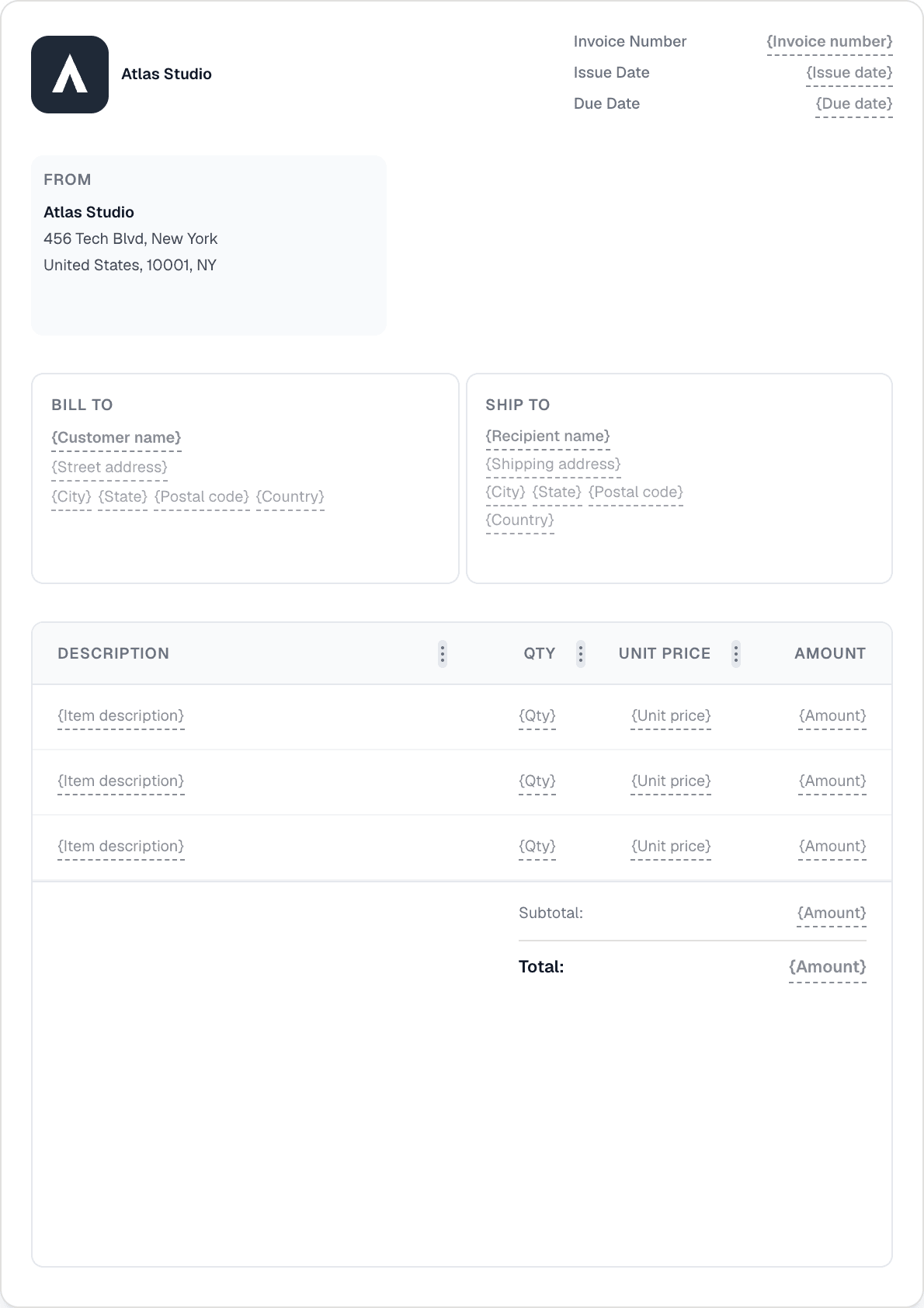

A VAT invoice is a formal invoice that meets a tax authority's legal requirements for recording and reclaiming VAT, including seller and buyer VAT numbers, VAT amounts, and rates.
A VAT invoice is an invoice that meets the specific legal requirements of a country's VAT legislation, enabling both the seller to account for output VAT and the buyer to reclaim input VAT. The requirements vary by jurisdiction but typically include: the seller's full legal name and address, the seller's VAT registration number, the invoice date, a unique sequential invoice number, the buyer's name and address (and VAT number for B2B supplies), a description of goods or services, the quantity and unit price, the applicable VAT rate(s) and the total VAT amount, and the total amount payable.
In the EU, VAT invoice requirements are set out in the EU VAT Directive (2006/112/EC) and are largely harmonised across member states, though each country may add requirements. Businesses must issue a VAT invoice for every taxable B2B supply and must retain copies for the statutory retention period (typically 5–10 years). Failure to issue a valid VAT invoice can mean the buyer cannot reclaim input VAT on that purchase.
Simplified VAT invoices are allowed in many countries for lower-value supplies (e.g. under €400 in Germany or €250 in the UK). A simplified invoice may omit the buyer's details but must still show the VAT rate and the total including VAT (from which the VAT element can be calculated). B2C cash register receipts often qualify as simplified invoices.
Invotify's invoice builder includes all the fields required for a valid EU VAT invoice. The dual-tax-per-line feature lets you apply two independent VAT rates (e.g. standard and reduced) on the same invoice. EU VAT number validation via VIES auto-fills the buyer's registered name and address, and Invotify warns you if a submitted VAT number is invalid — reducing the risk of issuing an invoice with incorrect buyer details.
A VAT invoice is a formal invoice that meets a tax authority's legal requirements for recording and reclaiming value-added tax. It must include details such as the seller's and buyer's VAT numbers, the VAT rate and amount, the net and gross totals, and a unique invoice number and date.
An ordinary invoice simply requests payment, whereas a VAT invoice carries the extra tax fields a registered business needs to charge VAT correctly and let the customer reclaim it. Only a properly issued VAT invoice supports an input-VAT deduction.
Requirements vary by country but generally include a sequential invoice number, the issue date, both parties' names, addresses, and VAT numbers, a description of the goods or services, the net amount, the VAT rate and amount, and the total payable. Missing fields can invalidate the customer's VAT reclaim.
Yes. Invotify lets you record VAT rates and tax presets, shows the VAT amount and totals on the document, and supports EU VAT (VIES) validation on Pro. The block-based editor lets you include the seller and buyer details a VAT invoice needs.
Create a professional invoice in under a minute. No design skills needed.